




05/20/2013

Acrylic

by Pierce Nahigyan

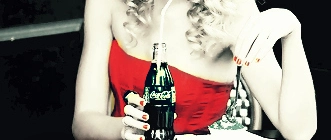
When Uncle Davis passed away, we hung his hunting rifle in the parlor. We put up a shelf for his pipe and his spectacles. Together, the artifacts composed a triptych of our departed uncle. The fine smells, the mounted elk heads, his Sunday morning crossword, all things he carried with him on his person, were his remains, a fond tribute after his inevitable passing. Aunt Tabby is a solid woman but my mother keeps circling the parlor asking what’s to be done about her. She says we cannot hang her television remote or her novelty ash tray or her acrylic nails on the wall. People would say things. I ask her if people don’t say things about keeping Uncle Davis in a separate room entirely, but she says her brother makes a much better coatrack than he does a table.

Until the dog goes, Aunt Tabby will have to remain where she is. If my mother wants to quibble with our taxidermy she’s more than welcome to, but in the future she better plan her accessories first. Dad’s fishing pole was a fine relic after he passed out of the parlor, and the curl of his fingers made for a perfect umbrella stand. That’s how you plan ahead. If she wanted classier mementos for Aunt Tabby, we could have moved her to the garage weeks ago. We need a new step ladder. But we can’t get her in there until we have something suitable for the wall, next to grandpa’s knife and grandma’s snuff box. We respect the dead in this house, my mother says, and reminds me to use a coaster for my drink.

05/17/2013

Acrotism

by Pierce Nahigyan

The fourth date is really the turning point. First date, second date, you’re getting into the groove, learning what she likes, hitting the night spots. The third date, if you get to the third date, is more fun, looser, more relaxed. Might even get lucky. Fourth date’s my wall.

See, the fourth date, not long after the third date, is a leisurely thing, a pre-planned picnic, a museum; it’s a weekend thing. It’s a daytime thing.

You can hide the paleness under bar lights, you can excuse sharp kisses with passion. In bed you can distract her from your acrotism with mood music of a bass-driven nature. Gone in the morning? Commitment issues.

Bursting into flames on the fourth date is a romantic faux pas.

Don’t say your heart bleeds for me. You’ll just make me hungry.

05/15/2013

Acrostic

by Pierce Nahigyan

Acceptable, they said, my alibi
Corresponds to yours. This criminal,
Released into your custody, will go
Oh so quietly, and no more Me v.
Society, nor mayhem, mischief, promise.
Time at last, I think, for poems only.
Inside, in law, the outlaw thanks the one who
Captured him. Hello, fair jailer you.

05/13/2013

Across

by Pierce Nahigyan

Across the street there is a pie cooling on a windowsill. It smells of berries. The red kinds. Before too long I’ll have to close my window, because I can’t have that kind of temptation in my life. Lydia, who baked the pie, ought to know better than this. May lightning take her, or the whirlwind. Seduction comes in many forms, and the seduced may bemoan our devils who make us do it, but we know what we are, and we are weak, and hungry. David peering from his roof saw a pie on a windowsill once. Not even God could stop him sneaking a taste. I am much more obscure, with few conquests to my name. How can I refuse the scent? How can I resist?

Tallyho.

05/10/2013

Acropolis

by Pierce Nahigyan

It was 430 B.C., at night, upon the acropolis. Athena Parthenos, the virgin goddess, admired herself, her aspect carved in solid stone, smooth and fair. In the temple the braziers burned hot on the sacred pavement, a fat, fertile calf still bleeding on her altar. The blood soaked into the pungent ferns strewn about, the seeds, the grain.

She swept her skirts about her, to face Pericles. He, though fair of face and thick of form, softened in her presence. If he was a king of men he was as the paling calf before her adamantine statue, mortal still. “I am well pleased,” she said. “Surely Athens’ parthenon will endure. And you, Pericles, will be remembered in the stars for your piety.”

“My piety is merely gratitude for your probity,” Pericles replied. He bowed low. “I am glad that the offering pleases you.”

“You have me exact,” she said, indicating the sculpted swell of her bosom.

“Yes, that was Phidias’ work,” said Pericles. “He said that you came to him in a dream, bidding him render you so.”

“It was a true dream,” she said. “I stood in the moonlight to his awe, and let him gaze.”

“An honor,” said Pericles.

“An honor not lightly given,” said Athena, “but well earned.”

“Yes,” said Pericles. He coughed politely.

Athena narrowed her violet eyes. “What?”

“Nothing,” he said. “Phidias is quite the craftsman.”

“What’s funny?”

“Nothing,” repeated Pericles.

“Pericles…” Athena started. And behind her voice far off thunder rolled over once placid meadows. She grew in aspect, her eyes alight.

“No, no-” Pericles said. He waved his arms before him. “No, I meant nothing. Phidias is a wonder – an honored wonder.”

Athena plucked Pericles from the pavement and held him aloft in a grip of steadfast iron. The king winced. “Pericles…” she said, her voice like tolling bells.

“I- Well- Er- It’s just, ah. Mm.”

“You’re stuttering, Pericles.”

“I had never heard of Phidias the sculptor, and his dream of the parthenos sounded like a lot of nonsense. So the sculptor spent a few months in Athens without work…had to earn his bread…and…he’s quite a draftsman, too.”

The goddess’ fingers squeezed his bones together. The king squeaked, “Very good likeness-” but his breath was running out. “Head to toe, lovely…” he gasped. He stammered, burping more blandishments, until his eyes bugged out of his skull: “Dirty pictures…”

Athena’s alabaster cheeks went bright as sunset. She dropped Pericles to the floor, where he broke his hip and foot.

“I promised him immortality in his art!” she shrieked.

“My oversight,” said Pericles in his broken pile. “Everyone has copies of those drawings by now. Myself excepted of course. I’m…pious…” His breath wandered dazedly inside his chest before exiting his mouth. “Are you mad?”

Athena exploded into a rouge tornado, picked up Pericles and flung him far from the Parthenon. He sailed over Athens, over the sea, over the morrow and the sun, until he landed, at last, in the sky.

The fate of Phidias has not been told to mortal men.

05/08/2013

Acrophobia

by Pierce Nahigyan

Benjamin, a cat, generally preferred the ground. As a stalking area it was remarkably vast, divergent in topography ranging from the television cupboard, the kitchen tiles, the lawn (in both overgrown and freshly mowed varieties), the street, and the sandy hills of the litterbox. All manner of landscape was available to him, so far as it was land.

The top of the bookshelf, he avoided.

The roof was verboten.

Window ledges, birdhouses, fences, awnings, mailboxes, were not his brand of catnip.

The tallest branches of the oak tree outside Emily’s window were especially ominous, reaching so nearly into her bedroom. Benjamin always gave the branches (leaves, too, in the proper season) a peremptory glare when he entered her room.

But then there was the day the mouse went up the stairs. So Benjamin went up the stairs. And then the mouse dallied in the bathroom. So Benjamin went to the bathroom. And then the mouse scurried through the bathroom to the adjoining room, Emily’s room, and hopped on the window seat, the window ledge, and ran up the branches of the oak tree; and by then Benjamin was ready to grab it and play with it and pound it for a bit, and then bite it and kill it and eat most of it, and when it came to that, that thirsty instinct, he followed it, over the carpet and over the window seat and up the branches.

It was only when he reached the top of the old oak tree that he realized his grave error. Benjamin, the acrophobic cat, was paralyzed. He stuck to the tree, stranded, claws way out, and yowled.

When Emily came home she was not pleased. Benjamin yowled at her to consider his feelings.

05/06/2013

Acronym

by Pierce Nahigyan

Around 2008, 2009, when the economy was just terrible, a lot of us in Las Vegas watched our friends disappear. We didn’t lose them per se, we just stopped seeing them around. Their houses were underwater, or they sold, or foreclosures forced them to less flamboyant cities. It got to where me and my lonesome self, in a suburban tract of thirty houses, had maybe two neighbors in my immediate vicinity. That didn’t stop people from finding uses for the space.

A community of swingers, mostly fresh divorcees and college kids doing part-time sentences in the booming casino industry, would bribe the realtors or plain break in to the house next door to me. And go at it. All night.

I heard animal noises around 2:30 in the morning so I stumbled out of bed for my slippers and walked the cold desert pavement to the house in hopes they might curtail their more ecstatic effronteries to monogamy. When I knocked, I wondered what they’d done to the door, but then I realized I’d fallen asleep with one contact in. I was rubbing my eye and trying to keep my head held high when the house got real quiet. I knocked again, and again, until finally I heard tentative footsteps in the carpet.

“Who’s it?” came through the door.

“Barry,” I said plaintively. It was just Barry. “I live next door.” I proclaimed it as if the assignment was a long and grueling one. I didn’t begrudge their fun, it said, I was simply old and tired and Barry.

A young woman opened the door. She was neither beautiful nor ugly. She was a full bodied girl, a little plump, like the midway doll in a Matryoshka set. She’d covered herself up with a robe and was tying her straw colored hair back from her sweat scrubbed face. “Yes?” she said.

“I was hoping, ma’am, if y’all might keep the noise a little lower. I have work in the morning, you see, and I am a light sleeper.”

She blushed and tried to keep the door to her back without giving me too much of a peek inside. The smell from within the house was hot and swampy, like a bayou of cologne. “I’m sorry,” she said, nearly breathless. “But I appreciate you coming over here. We were afraid you were the cops.”

“No,” I said, nodding. “The street over yonder,” I pointed, “is just about empty. Me and Mrs. Kane are the last ones here. She’s next door. And she might call the cops.”

The girl shivered, from the cold or the implication. “We can move our party there,” she said. She laid a hand on my shoulder and reached under her robe. She produced a card, and pressed it into my hand. “Thanks for not calling the cops.”

She closed the door and I heard the mass inside lifting themselves to the heavy task of cleaning their messes. With my one good eye on the card, I shuffled my way back to my house. It read: NICE TO MEET YOU. JOIN SPLAT!

SPLAT was an acronym, I later found out, for Some People Love Anytime.

It’s a fine world, I suppose, and finer when you can get it to make sense. Failing that, politeness in a time of desperation has never served me wrong.

05/03/2013

Acronical

by Pierce Nahigyan

God Bless This Mess was nailed over the doorway of her grandparents’ kitchen. She liked it. There was a faded maroon heart on the old woodblock grain, and faces, maybe snowmen or cherubs, and gloves holding up the letters. It was kitsch to him. She liked it.

When they moved to Los Angeles, the sun came up early and burned off any lingering fog and damp by lunchtime, most days. Even in winter, most days. And she rose with it and made a go of it. She drove him down Sunset Boulevard for his shows. After the shows, she found parking and accompanied him to the bar, and after the first year to the houses, the studios.

She bought a woodblock in Silver Lake and hung it over their kitchen sink. God Bless This Mess. If it made her happy he gave it a cursory smirk over their meals. She liked it. In winter they’d drive up to the mountains, if it was cold enough, to find snow. She played in it, skied in it. He videotaped her and they laughed on the drive down, the winding highway.

After another year he was driving himself. She wanted to give up her car and try the buses or the train. He still had to drive her to the stations. God Bless This Mess. He stopped asking her to come to the afterparties when he was finally so sick of her wilting like a potted plant. She couldn’t laugh with him with himself. She was fine staying home.

She asked him to drive her to see his last show, before she took the bus to the airport. He left her there at the bustop and she said she’d write. Email, he said, or phone. Why use the postal service? She wanted to write him. We don’t talk, he said. I’ll call you, when things are less intense. She clutched her bag to her knees and watched him drive away. The woodblock was still hung over the sink, and one week later it would be in the garbage, waiting at the curb.

One morning, waking with the sun, he looked through the window and saw that the garbage had been collected, the block was gone, with the mess. And some nights he’d think of her and her bag on that acronical boulevard. She liked the woodblock. He liked the space.

05/01/2013

Acromion

by Pierce Nahigyan

Most of the bones were still half-buried in the dirt. Stuck up perpendicular to the ground were finger bones and the spikes of the spine, a chipped acromion and a shard of pelvis. I stared at the skeleton in disbelief, not sickness or fear.

My son looked up at me, downright angry. The pile of dirt he’d dug all day was piled beside our tree, his shovel stuck in it so that the hilt of the blade shined above the clumps of soil and roots. He held onto it, sitting in the pile, above the skeleton. “Mom said I had to stop digging to China until you came home,” he said.

The hole was about four feet deep and about that wide. I was prepared to yell at him when I came outside; I thought he’d hit the sprinklers, a water main, fiber-optic cable, ancient and interred pet; not a dead guy.

I scratched my head. “Did he have a wallet?” I asked.

He looked up at me guiltily.

I held out my hand. “Hand it over.”

He gave me the wretched thing. It was leather once, mostly decomposed. Whatever had been inside of it was no longer an ID, nor much of anything. “Any money in here when you found it?”

My son shrugged.

“Did I raise you to be a grave robber?” I asked.

“Be fair, Chuck,” my wife said. She came up behind me and put a hand on my shoulder. “It isn’t a topic we’ve covered yet. He’s six.”

“Six and a half,” my son contested from his dirt pile.

I tossed the wallet back in the hole. “Alright. I’m getting the other shovel from the garage. No one’s going to China today.”

My son reluctantly pulled himself to his feet and took hold of his shovel. He dug it into his pile and began the long process of scooping it back in. My wife followed me to the garage. “Shouldn’t we call someone?”

I searched through our bin of assorted rakes, trowels, an axe, and baseball bats for the other shovel. “We could do that. We could call the cops, have them come up here, park on our lawn, unroll the police tape, ask us questions, involve the neighbors, and get to sleep at midnight. Or-” I pulled out the shovel and met my wife’s eyes. “Me and Tad can bury the bones, get cleaned up for supper, you and me can watch Roseanne, and we can all go to bed at a reasonable hour.”

My wife kissed my cheek and headed for the door. “Make sure he washes his fingernails. We’re having corn on the cob.”

04/29/2013

Acromegaly

by Pierce Nahigyan

Had a cousin, Elbert, was a giant. Didn’t mind being called a giant; he was about eight feet tall, give or take an inch. He wasn’t above complaining about being a giant, mind, and a family reunion was always a countdown till he smashed his head on some ceiling-hung obstruction. A chandelier in a discount diner couldn’t account for acromegaly, but it wasn’t Elbert’s fault either. He was obligated to carry on in a world whose gravity, and shirts and shoes, and women, by and large, were tailored for lighter, lesser men.

For a little while Elbert held a good job as a movie extra, now and then with a speaking role, when the background called for tormented creatures. He always looked very intimidating, though Elbert, on account of his size, spent most of his time sitting and reading. It was one of the few things he could do that didn’t frighten people. Elbert complained that he frightened people.

He died young. Giants do. He did a damn decent thing for his folks by buying his own casket with his movie money, and even figured out how to get a forklift onto the cemetery grounds to unload him. A few years before he died he told me he thought of donating his bones to science, but science had never figured out a way to shrink him to a less painful stature, so they could go soak their heads. They weren’t getting him dead or alive.

“You think God’s gonna be as big as you, when you get up to heaven?” I asked.

“He better be big,” said Elbert. “He better be big, and look like Cary Grant, and dance like Fred Astaire, and smile like Groucho Marx.”

“All that?” I said.

“How else is he gonna show me how to do all that? I’d look damn silly if I tried that stuff down here.”

Art by Ken

The works and artistic visions of Ken Knieling.

Dan the Man's Movie Reviews

All my aimless thoughts, ideas, and ramblings, all packed into one site!

Author Kristen Hope Mazzola

Everyone has a story; this is mine

Bucket List Publications

Indulge- Travel, Adventure, & New Experiences

Virus Comix News

Subnormality and some other stuff too.

Primitive Screwheads

Not the Smartest Tool in the Shed

Luminous Blue

a mother's and daughter's journey with transformation, cancer, death and LOVE

Follow

Get every new post delivered to your Inbox.

Join 206 other followers

%d bloggers like this: